Feature
Weather Command Center
Put the forecast on the field. Follow wind direction, roof state, rain timing, and carry through the full game window.
Venue weather, translated
See the conditions where they matter
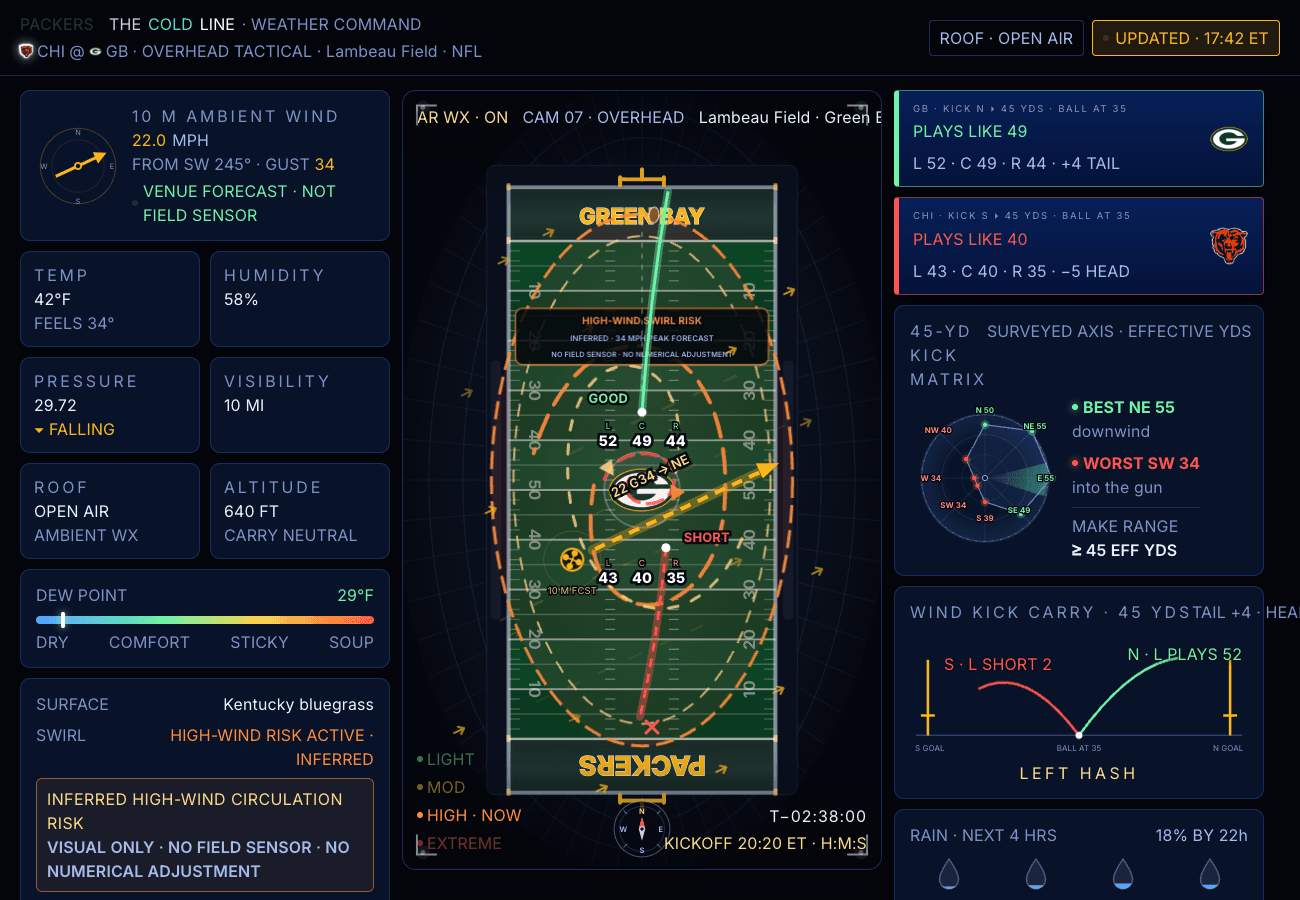
Weather Command Center connects sourced conditions to the venue itself. Wind is aligned to the playing surface, roofs stay visible, and the game window shows how rain, temperature, humidity, and air density develop from start to finish.
Playing-surface wind
See the sourced wind aligned to the diamond, football field, or pitch instead of decoding a compass reading.
Carry and kick context
Compare baseline flight with the conditions-adjusted path and see which direction the weather is working.
Roof state
Open, closed, retractable, and open-sided venues remain explicit so outdoor wind is never applied through a sealed roof.
Game window
Track temperature, rain, humidity, gusts, and wind changes around the scheduled start — not just the current hour.
What it is
Stadium temperature, wind, roof and dome state, and the carry context that can matter to a total.
Weather Command Center organizes the game-window conditions that matter: wind aligned to the playing surface, roof status, rain timing, temperature, humidity, and air-density context.
Why it is there
A forecast tells you what is happening near the venue. The Command Center shows how those conditions meet the actual playing surface — whether the wind is blowing out to left, crossing a goal attempt, or changing through the game window.
Roof state, field orientation, rain timing, and air density stay together, so the building and the weather are part of the read instead of an afterthought.
Why it is useful
Wind direction after venue orientation, roof or dome state, and air density change how conditions reach the game. A closed roof is not the same game as an open one. A 12 mph wind out is not a 12 mph wind in.
Game-window forecast tiles keep the hours around first pitch visible, so a dry current reading is not treated as the whole night when rain sits later in the window.
How it works
Baseball uses a diamond view to show wind in, out, or across the field and compare expected carry. Football uses the surveyed field axis for headwind, tailwind, crosswind, and kick context. Soccer places the game-window wind and conditions on the pitch. Confirmed roof classifications remain visible where they apply.
Public team and stadium pages explain fixed venue context. Today's slate is open to everyone, with current game-window conditions and sport-specific field views.