A pitch-by-pitch pricing engine for the state that exists now—not the one that existed at first pitch.
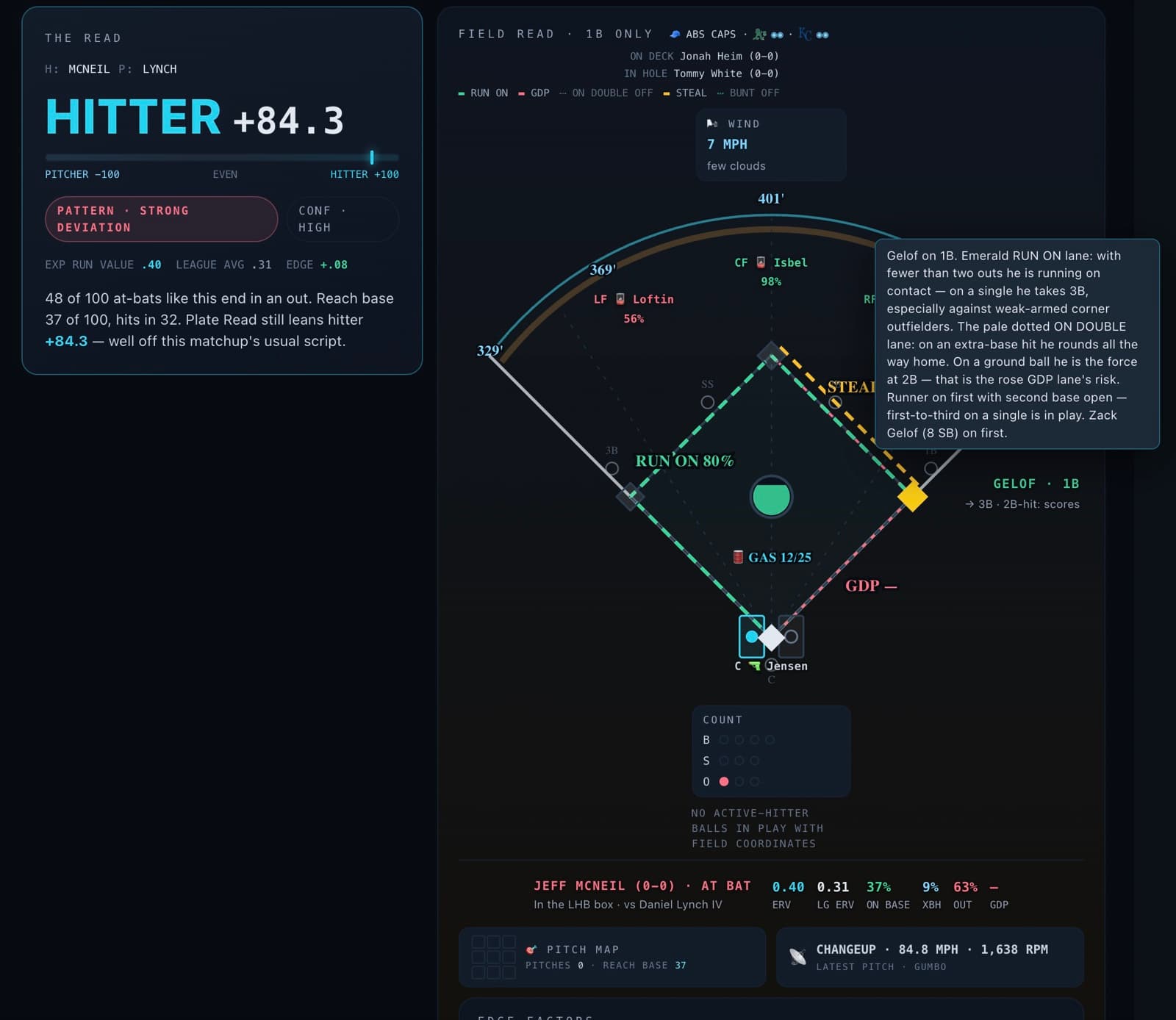
Captured live · ATH @ KC, top 1st · runner on firstHover any lane, runner or fielder and the desk explains what you are looking at.
Nothing on the diamond is unlabelled
The lanes on that field are not decoration. Hover the runner on first and the desk tells you why the emerald lane is drawn: with fewer than two outs he is running on contact, on a single he takes third against a weak-armed corner outfielder, and on a ground ball he is the force at second — which is what the rose GDP lane is costing. Every fielder, every distance, every percentage carries the same explanation. You never have to guess what a number on this screen means.
The Plate Read Signal
A price is only honest about the state it was taken from. Most numbers on a baseball game are struck once, before anyone throws a pitch, and then left alone while the game moves underneath them. Plate Read prices the state that exists right now — the count, the outs, who is on base, how deep the pitcher is into his outing, the leverage of the moment — and restates the number every pitch.
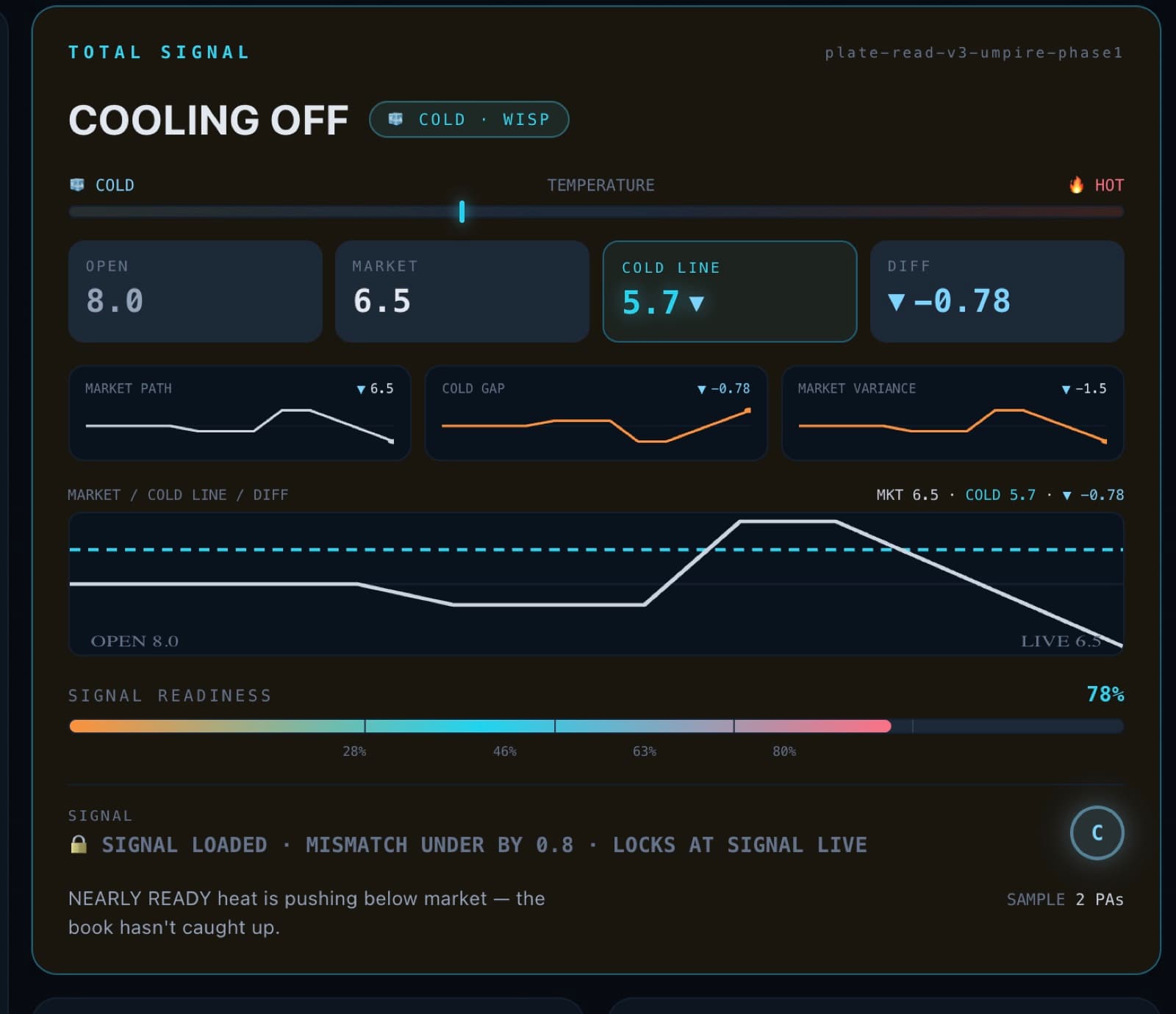
The signal does not appear immediately, and that is deliberate. It walks through Collecting, Forming, Building and Nearly ready before it will call itself Signal live. Until it has earned a read it says so, rather than showing a confident number built on three pitches. When the earned read is neutral, it reports neutral.
Captured live · WSH @ TEX, top 8thOpen is where the book started. Market is where it is now. Cold Line is our price for the state on the field.
Everything on that row is an input, not decoration. Two outs with a runner on second is not the same game state as nobody on with none out, and a pitcher twelve pitches into an inning is not the pitcher who started it. That is what the desk is repricing against.
What it is
Plate Read is The Cold Line live MLB at-bat desk. It prices the plate appearance that is happening now — count, leverage, the pitcher, the runners — instead of recycling the number from first pitch.
The live view is Field Read: the diamond, the current state, and the current price on one screen, so the explanation stays beside the live state.
Why it is there
A baseball game is not one price. Each pitch changes the state. Count, fatigue, velocity, who is on base, and the park all move the number. A first-pitch snapshot goes stale while the at-bat is still live.
Plate Read exists so the desk can reprice that state as it happens, then sit next to the related reads — Pitch Pattern and Total Signal — without treating them as the same tool.
Why it is useful
It keeps the live at-bat honest: what the state is now, not what it was. Count, leverage, fatigue, velocity, baserunning physics, and park geometry arrive as one picture. Members use it to read the current plate appearance beside the game line, pitch by pitch.
Analysis only. The Cold Line is a pricing-signal desk, not a sportsbook. We do not take action. We do not publish a tout record or promised hit rates.
How it works
Reprices the current at-bat from the live count and leverage, not a first-pitch snapshot.
Reads pitcher fatigue and velocity as the outing develops.
Applies baserunning physics from the live bases and park geometry.
Field Read is the default live desk: diamond, state, and price on one screen.
Pitch Pattern and Total Signal sit beside it as related reads, not substitutes.